Is There Enough Water for North Phoenix's Growth?
Last reviewed: November 23, 2026
Short answer: North Phoenix's growth is being planned around water, not in spite of it. TSMC already recycles 65% of the water it uses and is building a plant to push that to 90% or more. The City of Phoenix is also building new water purification plants in north Phoenix, with the first expected to deliver purified drinking water in early 2029.
"What about the water?" is the question I hear most about our area. So I sat down with Scott McGill of MCG Commercial Real Estate, who knows the commercial side of the 85085 better than anyone, to talk it through.
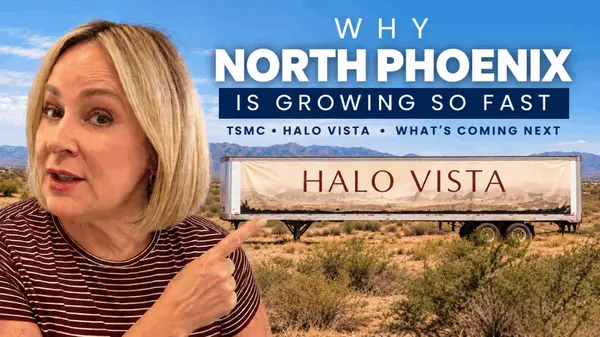
Watch: Shelley and Scott McGill on North Phoenix water and growth
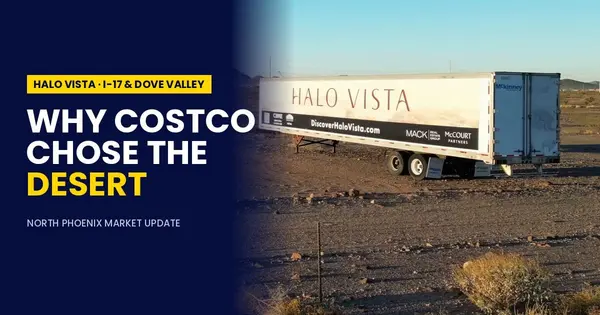
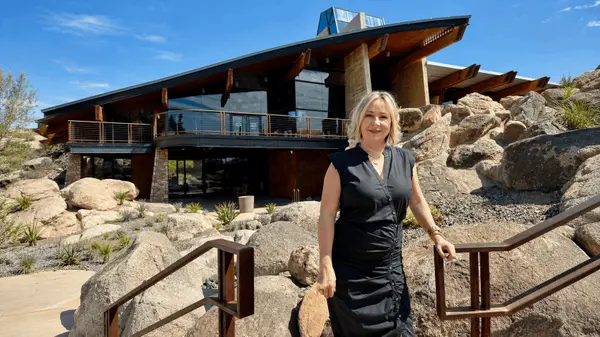
We filmed this in November 2026 on an empty desert lot near W Sonoran Desert Drive and N North Valley Parkway. Scott says this area is set aside for a future water treatment facility.
Where does North Phoenix get its water?
Phoenix doesn't rely on one source. The city draws from the Salt and Verde rivers, the Colorado River through the Central Arizona Project (CAP) canal, a small amount of groundwater, and reclaimed wastewater (Arizona's Family). Because of where it sits, north Phoenix, including the TSMC campus, will likely get most of its supply from Colorado River water delivered by the CAP canal, according to ASU water policy expert Sarah Porter.
Scott pointed out two things in our interview:
- North Phoenix sits on a large aquifer. He described it as one of the biggest in Arizona, and it runs under the TSMC site.
- Cities aren't the biggest users of Arizona's river water. Scott noted that most of the state's Colorado River water goes to farms, mainly from the West Valley down to Yuma, not to Phoenix-area homes.
What new water projects are planned for North Phoenix?
Here's where each project stands as of November 2026:
|
Project |
Status |
What it does |
Timing |
|---|---|---|---|
|
Under construction |
Turns treated wastewater into purified drinking water, nearly 7 million gallons a day, enough for about 25,000 households (City of Phoenix) |
Purified water in city pipes in early 2029 (KJZZ) |
|
|
Funded, not yet under construction |
A second purification plant in northwest Phoenix, backed by $179 million in federal funding |
Expected around 2030 (KTAR) |
|
|
Under construction |
A 15-acre plant on TSMC's campus that recycles industrial wastewater |
Operational in 2028 |
Scott also mentioned plans for a new water and sewer treatment facility serving this area, with construction possibly starting in 2028. Its exact location hasn't been announced, so treat it as proposed for now.
Is TSMC using up North Phoenix's water?
TSMC is a big water user, but it recycles a lot of what it takes in. The campus uses about 4.75 million gallons a day today, mostly reclaimed wastewater from the city's supply (Arizona's Family).
- Today: TSMC recycles 65% of its water on site, reusing it in cooling towers and air scrubbers (AZ Big Media).
- 2028: its new reclamation plant opens, starting at 85% recycling.
- Goal: 90% or better, which TSMC calls "near zero liquid discharge."
As Porter explains, the number that matters most isn't how much water TSMC takes in, but how much it actually uses up. Because it keeps reclaiming its water, its net use is much lower than the headline figure. As Scott put it, homes and most businesses don't recycle their water. TSMC does.
What does all this growth mean for North Phoenix homes?
Here's what I'm seeing, boots on the ground. The Sakala Group has sold more than 300 homes in the 85085 ZIP code since 2007, according to MLS data. So far, we haven't seen a big wave of buyers who identify as TSMC employees. Many newcomers are renting apartments nearby first. Right now, homes that take 90 days or more to sell are usually held up by mortgage rates, not a lack of interest in the area.
Scott expects that to change over the next two to three years as TSMC's suppliers and partner companies move in and their employees look to buy. A lot is already in motion:
- NorthPark (approved, per Scott): Pulte's master-planned community covers about 6,381 acres at the southwest corner of I-17 and Loop 303 (City of Phoenix rezoning case Z-139-24-1). Scott says it was approved for about 15,000 homes.
- Halo Vista (under construction): a 2,300-acre development next to TSMC. Its first tenant is a Costco at I-17 and Dove Valley Road (ABC15). Scott expects shop spaces to follow in about two years.
- Union Park (grocer confirmed, brand not yet): a grocery store is planned. Scott has heard Trader Joe's and Whole Foods, but neither is confirmed.
- Auto malls (under construction): Scott says eight are planned near I-17 and Carefree Highway, with three already in production.
For the latest on each project, see our North Phoenix Growth Guide. If you're wondering what this means for your home's value today, check the current 85085 Market Report.
Key takeaways
- North Phoenix's water comes from several sources, mainly Colorado River water through the CAP canal.
- TSMC recycles 65% of its water today and is building a plant to reach 90% or more, starting in 2028.
- Phoenix's Cave Creek purification plant is under construction, with purified water expected in early 2029.
- A second city plant, North Gateway, is funded and expected around 2030.
- New homes, retail and jobs around TSMC are expected to lift demand for North Phoenix homes over the next two to three years.
Thinking about buying or selling in North Phoenix? Find out what your home is worth here or reach out anytime. The Sakala Group has been helping North Phoenix families since 2007.
Full Interview Transcript: Shelley Sakala and Scott McGill
Lightly edited for readability. Figures are as spoken in the interview; see the post above for verified numbers.
Shelley: We're joined again by my good friend Scott McGill, who knows everything there is to know about what's happening commercially up in the 85085. Let's start with the fun stuff. Everybody cares about the shopping, the dining, and the homes that are going to be built. What's coming to the area?
Scott: First of all, I was at Cava last night for the first time. So glad that's open. It's a little further south, but it's one of my staples. What you're going to start seeing is Halo Vista really coming into effect, with all the groundwork and earthwork happening. I think that will help people understand what's going on in the North Valley. A lot of retail. I'm sure everyone's heard about the Costco that's coming, and various things that will complement it. I'm doing some work in that area, and we're still about two years out before we see any of the shop spaces at Halo Vista. They want to do the big box first, then come back to the pad sites, and the shops will be last. That's typical for new development.
Shelley: Anything else sprinkled in that you know about?
Scott: The sad part is we lost the retail component from Vestar. They were outbid at auction last year on the land north and south of the hospital, on the east side of I-17. It was bought by a group out of Virginia that hasn't said what it wants to do there. That was sad, because we had a lot of retail and a mall planned. So that's on the table at this point.
What they've already broken ground on are the auto malls at the southwest corner of I-17 and Carefree Highway. They're expected to have eight, and three are in production. That will light up the North Valley tremendously. A lot of what we work on is second-generation space. The Denny's on Carefree Highway was purchased, and another restaurant is coming in. We fill in the pieces that need to be filled, and then we go out to the new developments.
Shelley: I think what everybody wants to know about is Union Park. As far as I know, a Trader Joe's is still slated for that area. Have you heard anything?
Scott: I know it's listed as a grocer, and you can narrow that down pretty fast. They won't put a Fry's or a Walmart in there. I've heard Trader Joe's and I've heard Whole Foods, but I haven't seen either 100% verified yet.
Shelley: So it's probably one of those two. Every time we do these videos, it's obvious a lot of the growth in our area is directly related to TSMC, the Taiwan Semiconductor Manufacturing Company. And the question always is: this growth is great, but what about the water? Is this going to create problems for our water resources?
Scott: We see that a lot on social media. Something gets proposed, and then you see 20 or 30 comments asking, "What about the water?" I see it at the North Gateway Village Planning Committee too. The topic might be streets or something completely different, and several people in the audience will ask about water.
There are two camps when it comes to water in the North Valley. One camp says there's no water. The other says we probably have water, so what are we doing to use it in the future? What I love about the City of Phoenix is that it plans decades in advance. We know we're in the desert, so we have to plan for that. I'm seeing studies that go all the way out to 2050.
The biggest thing I've seen over the last year is the Colorado River agreement that hasn't been made yet, and how much water Arizona will receive. People get into that fear of "we're not going to have any water." What most people need to realize is that about 67% of Arizona's Colorado River water goes to farms, generally from the West Side all the way to Yuma. Only about 27% goes to municipalities in the Phoenix area. So we need water from somewhere else.
Shelley: And you said we're standing on an aquifer?
Scott: We're standing on one of the largest aquifers in Arizona. It's not the largest, which is in the northeast part of the state, but this one is massive. And it sits right under the TSMC plant.
What we're standing on right now is the proposed site for a new water treatment center and sewer treatment center, which will run up to Dixileta. It will probably start being built in 2028 and be done by 2029. We don't have a specific location yet, but we've been told it's allocated for this area. The city has been trying for several decades to pump that water up to the North Valley, because of all the homes, infrastructure and retail coming in. Water has to be the component that drives the North Valley.
Shelley: Let's talk about what TSMC is doing with water. It's the same question people ask about data centers. Is it about recycling the water?
Scott: Correct. Most people don't realize TSMC has decided to be almost self-sustaining, so it won't need resources from outside where it's located. Water is the big one. People hear things and think, "You're taking all our water and we'll have none for ourselves." What actually happens is that TSMC has recycling plants on site. They want to recycle 65% of all incoming water by 2028, and 90% by 2030 or 2031. I've heard different reports on both.
So yes, they use a lot of water up front, but so do all these homes and businesses, and they don't recycle their water. TSMC does. As the fabs get built out, and there are seven total that we're being told of, they're going to do that on every single one. So this isn't taxing the North Valley and the water department.
Shelley: Your specialty is commercial, and mine is residential. A lot of people ask me about the TSMC effect on our neighborhoods. The Sakala Group sells the most homes in the 85085 zip code, and I have not seen a major impact from TSMC buyers, at least ones who've identified themselves as such. A lot of them are in the apartments throughout the area, which some people also complain about.
Scott: On the commercial side, Deer Valley has exploded. I used to say if you needed industrial space for a client, you'd have no problem finding it in Deer Valley. Now we can't find anything. And new development there is astronomical when it comes to land prices and construction costs. It's almost come to a stalemate, because we have to take clients elsewhere instead of right in their backyard.
There's no doubt in my mind the trickle-down effect will come. You can't put that much commercial infrastructure in one area and not have it expand outward. In October of last year, the city approved 15,000 homes in NorthPark. Some people weren't happy about that. But they're anticipating that people will come in droves with all the companies around the TSMC plant and the ancillary companies. That's what you'll see over the next two to three years. Those employees will either stay in an apartment, because maybe they don't hit that threshold yet, or they'll buy.
Shelley: I agree. I think we'll see that affect our home values, but it will take another two to three years to come back around and really increase property values. Let me ask you this. From TSMC, which is just over our shoulder at the 303 and I-17, all the way around the 303 to Surprise, that whole corridor is exploding. It's not just here.
Scott: Anybody can see what's happened already. Amkor is building at Lake Pleasant Parkway, and that's a massive company. As you go around the bend, I'm seeing land transactions for homes, retail, churches, all of it. In commercial, I always say the waiting game is two to five years. The caveat is that rates have to come down. You don't get a lot of home buying at 7 and 8%. On the commercial side, though, they're blowing and going. They're usually cash buyers with money from other sources, so they aren't held back by rates.
Shelley: Most of the slowness I'm seeing, with homes taking 90 days or longer to sell, is completely based on rates.
Scott: Absolutely. It 100% hinges on rates. That's the main component in the U.S. and in Phoenix right now. That has to change for this to really explode the way people say it will.
Shelley: Either rates change or home prices come down. Something has to give. Thanks so much, Scott. You're the commercial king of this area. If you're looking for commercial or residential real estate, please get in touch. Like and subscribe, because we'll be doing a lot more videos on growth in North Phoenix. Drop your questions in the comments, and if they're for Scott, I'll make sure he gets them.
Sources
- City of Phoenix: Pure Water Phoenix at Cave Creek Plant
- City of Phoenix: $179 million in federal funds for North Gateway Advanced Water Purification Facility
- City of Phoenix: NorthPark rezoning case Z-139-24-1 staff report
- AZ Big Media: TSMC Arizona begins construction on new industrial water plant
- Arizona's Family: TSMC Arizona expansion could make it Phoenix's largest water customer
- Arizona's Family: Arizona's chip footprint grows, but TSMC's water demand sparks questions
- KJZZ: Recycled wastewater is coming for Phoenix faucets
- KTAR: North Phoenix drinking water plants
- ABC15: Work begins on $7B Halo Vista
Categories
Recent Posts